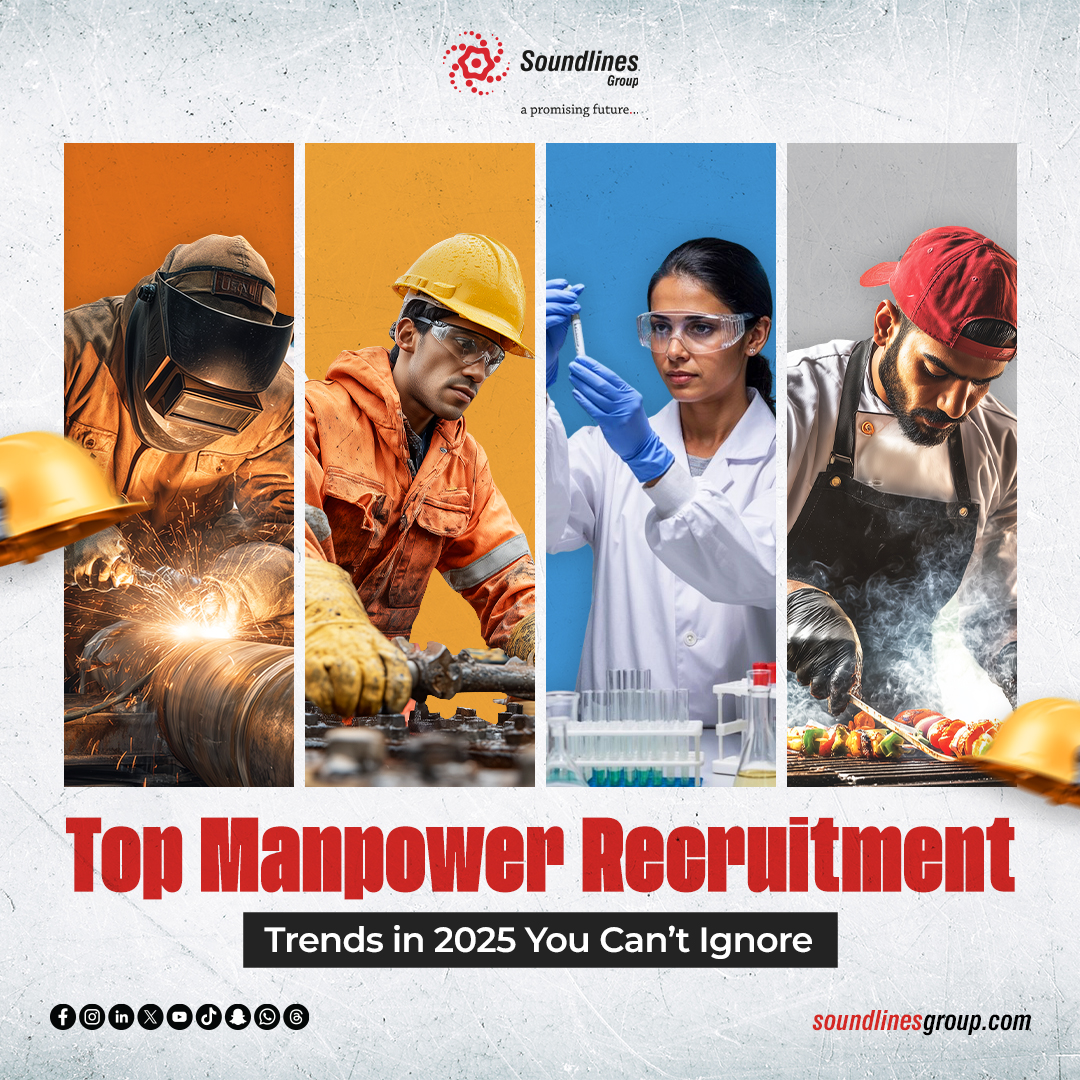
Whether you’re an HR leader in construction, healthcare, logistics, or retail, staying ahead of emerging trends is the key to staying competitive. Let’s dive into the top recruitment trends shaping the global manpower landscape this year.
1. Demand for Ready-to-Deploy Blue-Collar Workers Is Rising
Across industries—especially in regions like the Middle East, Russia, and Africa—employers are seeking candidates who are not only skilled but also deployment-ready. This includes:
- Completed medicals and visa documentation
- Trade testing certifications
- Basic training in language and safety compliance
Recruiters who can mobilise manpower within 15–20 days will have a major advantage in 2025.
2. Multi-Skilled Workers Are in High Demand
Employers are no longer looking for single-role workers. In 2025, multi-skilled candidates—such as a warehouse picker who can also operate a forklift, or a plumber who understands basic electrical troubleshooting—are becoming highly valuable. These profiles reduce staffing costs and increase operational flexibility.
3. Recruitment Tech Is Speeding Up the Process
From AI-powered candidate screening to automated interview scheduling, recruitment is becoming faster and smarter. International agencies are leveraging tools to:
- Pre-screen thousands of CVs in minutes
- Match skill sets with job requirements
- Reduce onboarding delays by using automated compliance checklists
This tech-driven approach is helping companies hire better talent, faster.
4. Language and Cultural Training as a Differentiator
In markets like Russia or the GCC, employers are giving preference to candidates who have undergone basic language orientation or cross-cultural sensitivity training. In 2025, manpower recruitment is about more than hard skills—soft skills and adaptability are becoming key metrics.
5. Healthcare and Logistics Are Leading Recruitment Sectors
Two industries are seeing the fastest growth in overseas manpower demand:
- Healthcare: Nurses, lab technicians, paramedics, and support staff for hospitals in the UAE, Saudi Arabia, and Europe
- Logistics: Pickers, packers, drivers, and warehouse handlers for e-commerce and last-mile delivery networks
If you’re recruiting for these sectors, expect intense competition for the best candidates.
6. Project-Based Hiring Is Becoming Mainstream
Companies managing short-term infrastructure or seasonal retail/logistics projects are increasingly opting for project-based recruitment models. These contracts are:
- Time-bound
- Output-focused
- Cost-optimized
Agencies offering flexible deployment cycles and rotation models will dominate this space in 2025.
7. Employer Branding Matters—Even in Blue-Collar Recruitment
Gone are the days when job seekers just “took what they got.” Today’s skilled workers—especially from India, Nepal, Bangladesh, and the Philippines—look for:
- Transparent contracts
- Ethical recruitment
- Verified job offers
Recruitment agencies and employers who invest in trust, visibility, and clear communication will build stronger talent pipelines.
8. Cross-Border Compliance and Certifications Are a Must
With tightening labor laws in many countries, compliance is now at the heart of recruitment. In 2025, agencies must:
- Stay updated with country-specific emigration rules
- Work only with licensed partners
- Ensure medical, police clearance, and skill certifications are in place
Non-compliant recruitment is no longer a risk—it’s a liability.
Final Thoughts
The manpower recruitment landscape in 2025 is evolving fast. Employers and recruiters must adapt by prioritising speed, transparency, multi-skilling, and technology. The focus has shifted from “finding people” to “finding the right people, at the right time, with the right readiness.”
Visit www.soundlinesgroup.com to hire internationally, and staying aligned with these trends and building a workforce that’s not just functional, but future-proof.