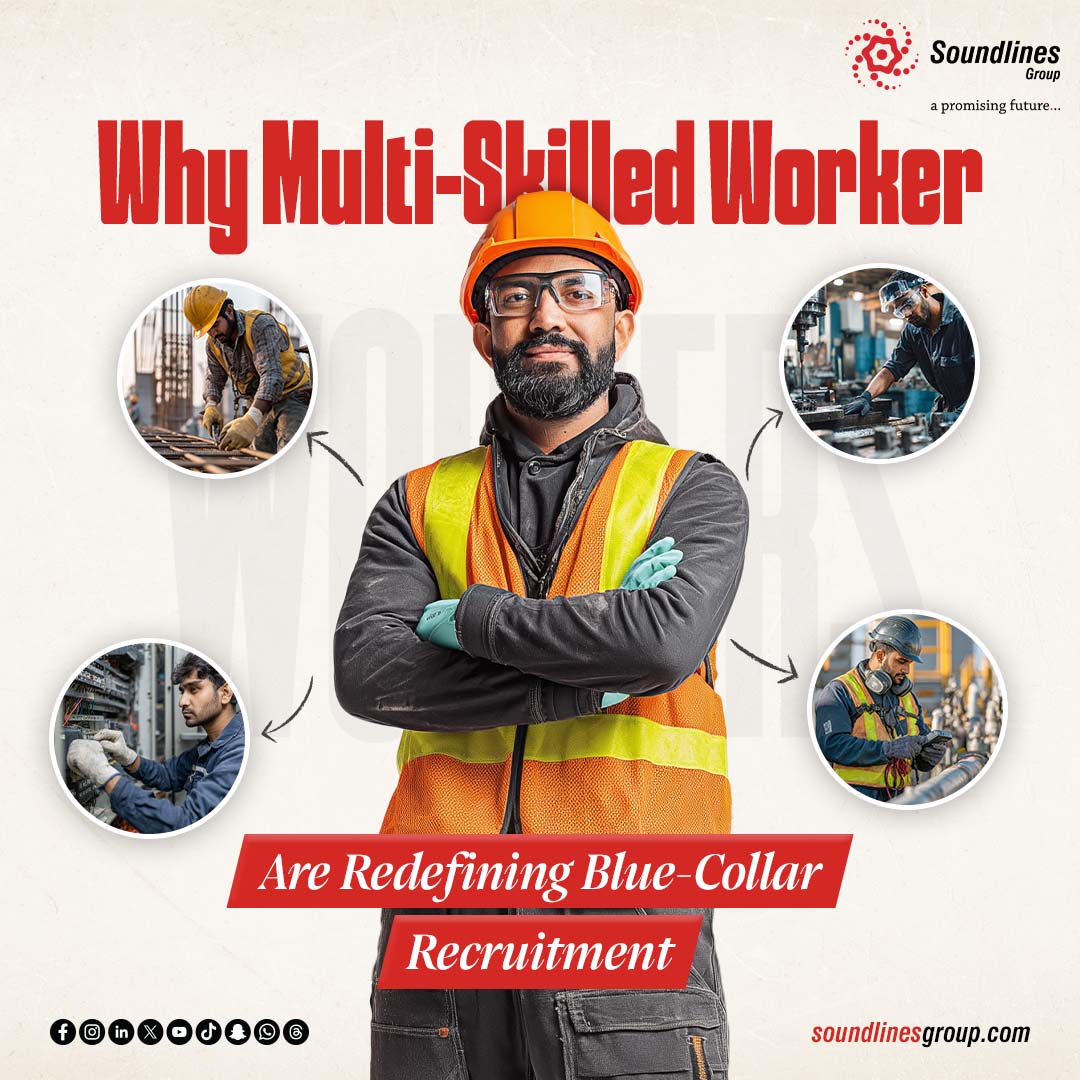
The blue-collar workforce has always been the backbone of industrial growth — the people who build, repair, and keep operations running. But as industries evolve, so does the definition of “skilled.” Employers across construction, manufacturing, logistics, and facility management are now looking for multi-skilled workers — individuals capable of performing diverse tasks across departments. In 2026, this shift isn’t just a trend — it’s a structural transformation in how companies hire, train, and retain manpower.
Table of Contents
ToggleThe Demand for Versatility
Industries today operate under tight deadlines, leaner budgets, and technology-driven processes. Having a workforce that can flex between roles allows companies to stay agile.
For example, a construction electrician who can also perform basic plumbing work saves both time and coordination costs. Similarly, a warehouse worker trained to operate a forklift or manage inventory digitally can seamlessly fill operational gaps.
This adaptability ensures that work continues even if there’s a shortage in one specific role. For employers, it means fewer disruptions. For workers, it means better job stability and higher earning potential.
The Shift from “Specialist” to “Cross-Trained” Talent
Earlier, recruitment focused on trade-specific roles — welders, carpenters, mechanics. The 2026 reality is different. Employers prefer multi-skilled workers who bring cross-functional awareness to job sites.
This change is being driven by three forces:
- Automation and Digital Tools: As industries adopt smart machinery, employees are expected to handle both manual and tech-based tasks.
- Project-Based Operations: Shorter project lifecycles require teams that can switch roles without extensive retraining.
- Cost Optimization: Multi-skilled teams reduce overheads, as companies can operate efficiently with smaller, more capable groups.
The Recruitment Challenge
Finding multi-skilled talent isn’t easy. Traditional blue-collar hiring systems often screen candidates for one role, not multiple competencies. This is where advanced manpower partners like Soundlines Group make a difference.
By conducting comprehensive trade testing and cross-skill assessments, recruitment agencies can evaluate workers on their adaptability, technical depth, and willingness to learn new trades. Pre-deployment training programs further help bridge skill gaps — turning single-skilled workers into versatile assets before they reach the worksite.
Upskilling as a Continuous Process
A multi-skilled workforce isn’t built overnight. It requires continuous upskilling, not just at recruitment but throughout employment.
Forward-thinking companies are partnering with recruitment firms that can integrate skill development programs into the deployment cycle. This ensures that workers remain relevant even as technologies and project requirements evolve.
Training modules may include:
- Cross-functional basics (electrical + plumbing, welding + fabrication, etc.)
- Safety and compliance refreshers
- Basic software or digital equipment operation
- Leadership training for senior tradesmen
The payoff is enormous: higher productivity, lower error rates, and a workforce that can evolve with the business.
The Employer’s Advantage
Employers who invest in multi-skilled manpower gain more than flexibility — they gain resilience. Whether facing sudden absenteeism, supply chain delays, or skill shortages, these teams can adapt and maintain momentum.
In global markets, especially across construction, oil & gas, manufacturing, and logistics, this adaptability is a key competitive edge.
Moreover, multi-skilled recruitment supports ethical employment practices by creating long-term value for workers. Instead of short-term, repetitive hiring, it fosters sustainable career growth — aligning business success with worker well-being.
The Future of Blue-Collar Hiring
By 2026 and beyond, companies that treat manpower as a strategic resource — not a transactional one — will lead the next wave of industrial growth. The new standard isn’t just about having a workforce; it’s about having a capable, cross-trained, and confident one.
Soundlines Group continues to help global employers build future-ready teams — sourcing, testing, and training workers who can take on multiple responsibilities across sectors.
If your next project demands flexibility, precision, and speed, partner with Soundlines.
Visit soundlinesgroup.com to explore workforce solutions built for the future.