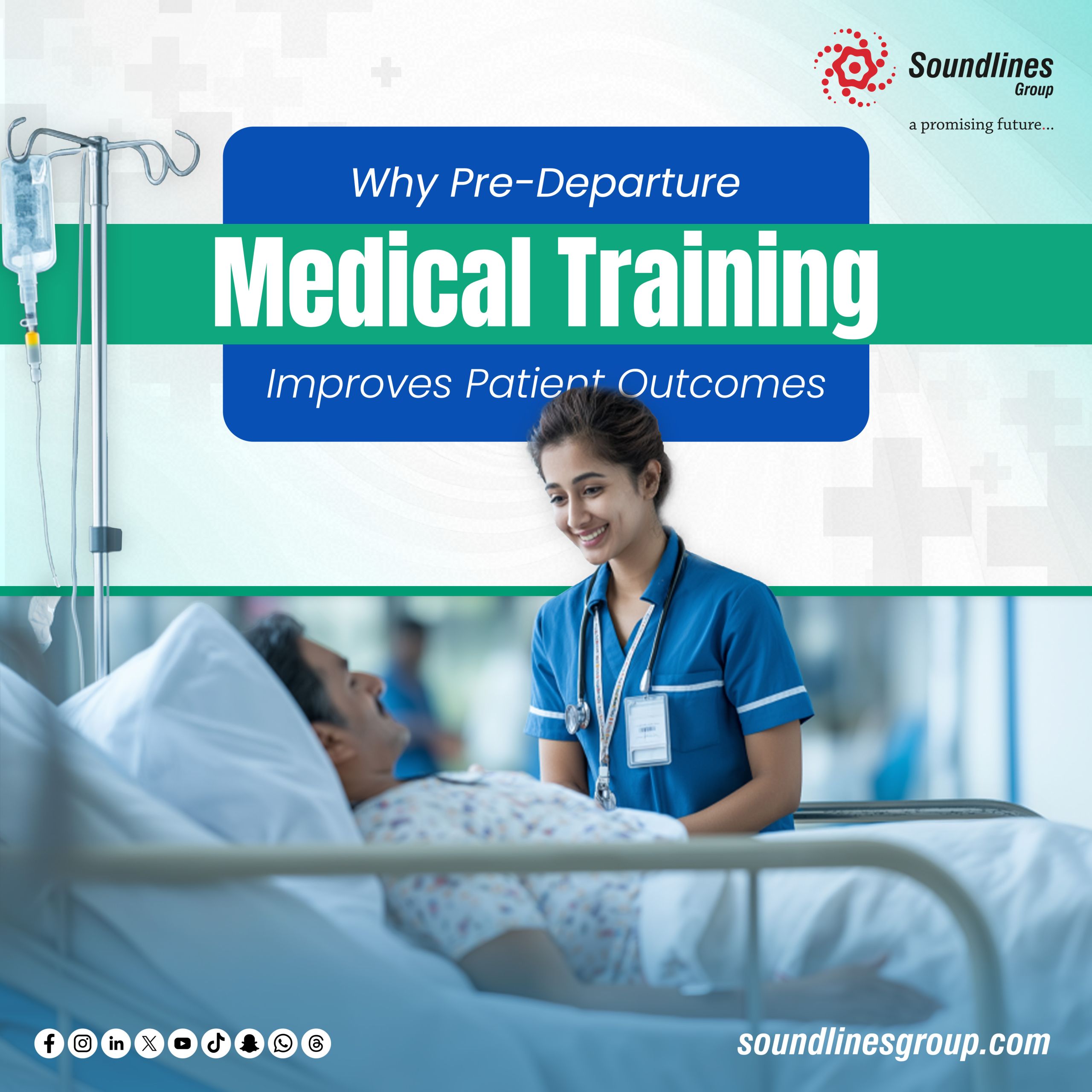
When hospitals across the Middle East hire healthcare professionals from overseas, they’re not just hiring skills, they’re hiring accountability, communication, and care delivery under pressure. That’s why pre-departure medical training isn’t just a checkbox. It’s a game-changer.
As an overseas manpower recruitment agency placing hundreds of nurses, technicians, and paramedics each month in international hospitals, we’ve seen firsthand how training before deployment leads to better hospital integration—and ultimately, better patient outcomes.
Let’s explore why.
1. Bridging Practice Gaps Between Countries
Medical protocols and healthcare standards vary from country to country. Even highly skilled nurses from India or the Philippines may not be fully familiar with the procedures or equipment used in hospitals in UAE or Saudi Arabia.
Pre-departure training bridges this gap by:
- Familiarizing recruits with international healthcare standards
- Practicing common scenarios like triage, infection control, or emergency protocols
- Reducing on-the-job learning curves that can delay critical care
The result? Professionals who are not only qualified, but also aligned with the hospital’s standards from day one.
2. Reducing Medical Errors Through Role-Play and Simulation
Patient safety depends heavily on communication, clarity, and calmness under pressure. Pre-deployment sessions often include real-life simulations, allowing healthcare workers to:
- Practice emergency situations in a controlled environment
- Rehearse communication in English or Arabic
- Handle electronic health records and documentation systems
By the time they reach the hospital floor, they’re better prepared to act decisively and accurately, minimizing human error and improving patient response times.
3. Improved Confidence and Adaptability
New environments can shake even the most seasoned professionals. Many healthcare workers report anxiety when adjusting to different work cultures, especially in high-pressure sectors like emergency care or surgery.
Pre-departure training acts as a mental and emotional primer:
- Building confidence through hands-on preparation
- Addressing culture-specific expectations (e.g., gender protocols, communication hierarchies)
- Teaching soft skills like teamwork, leadership, and time management
This preparation ensures faster adaptation, which directly benefits patient satisfaction and hospital efficiency.
4. Language Training Enhances Patient Interaction
A medical professional may be technically sound, but if they can’t communicate clearly with colleagues or patients, it hinders care. Language training is often part of our pre-departure modules, especially focused on:
- Medical English
- Arabic phrases commonly used in hospitals
- Patient communication scripts
This results in:
- Smoother handovers between shifts
- Better patient counselling and education
- Fewer communication-related missteps during procedures
5. Hospitals See Lower Dropout and Rejection Rates
From an employer’s perspective, staff who are well-prepared tend to:
- Settle into roles faster
- Deliver quality from day one
- Require less direct supervision in the initial weeks
This significantly reduces attrition or contract cancellations due to performance issues. In return, hospitals get a stable workforce and reduced onboarding costs, while patients get uninterrupted, consistent care.
In Conclusion
In healthcare, success isn’t just about recruitment—it’s about readiness. Pre-departure medical training ensures that every professional walking into a hospital is equipped to deliver results from day one.
Whether it’s managing patient loads, following international care standards, or simply understanding cultural norms, trained staff outperform, adapt faster, and most importantly, deliver better outcomes.
For hospitals hiring from abroad, this training is not just an add-on—it’s an essential part of future-ready, patient-first recruitment.
Looking to hire overseas medical professionals ready for day-one performance? Partner with an agency that trains, prepares, and delivers talent that fits—clinically and culturally. Let’s raise the standard of global healthcare, one professional at a time.