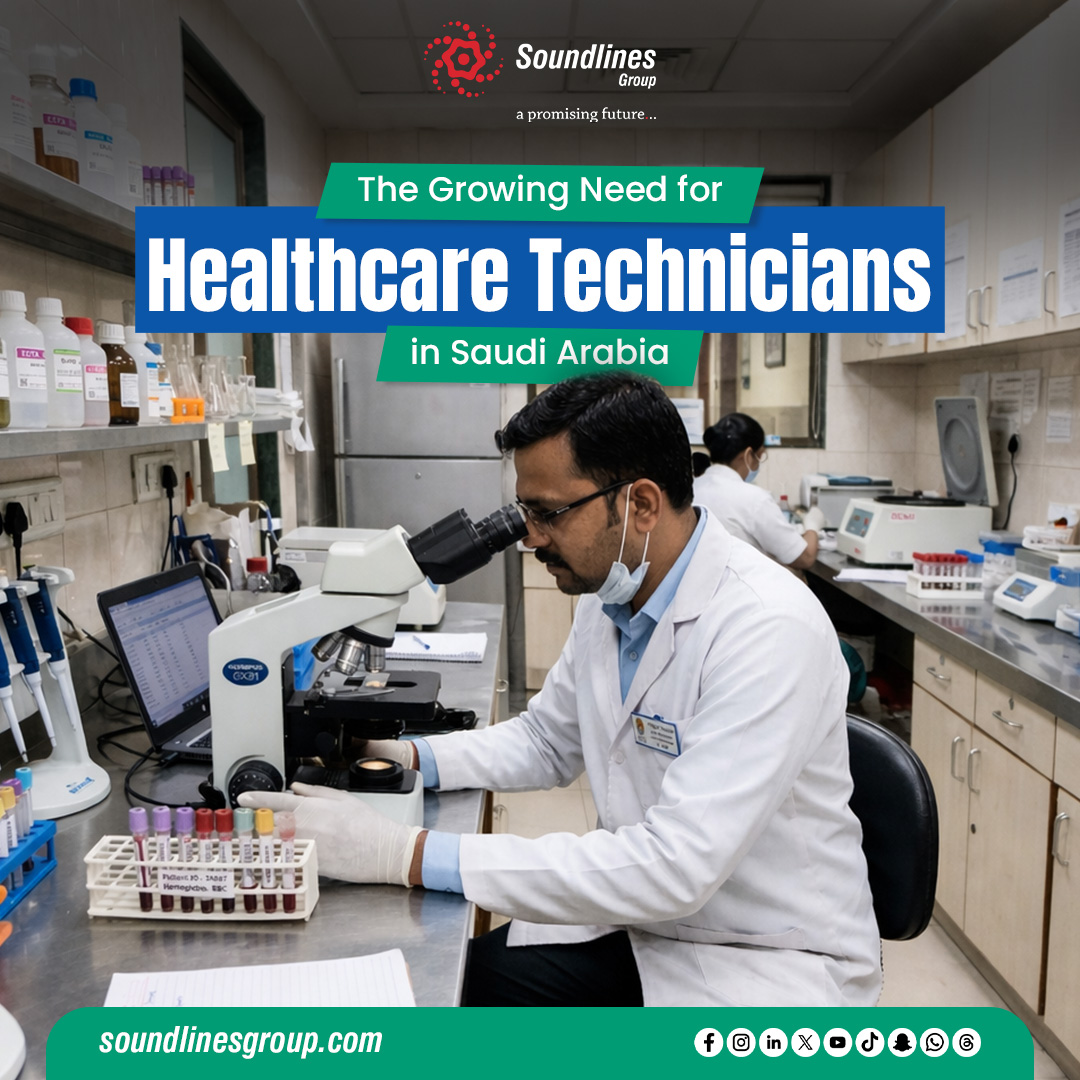
Saudi Arabia’s healthcare sector is expanding at a pace that is both ambitious and necessary.
With new hospitals, specialty centers, and healthcare infrastructure being developed under Vision 2030, the focus is often on doctors and nurses. However, behind every diagnosis and treatment is a critical layer that is increasingly under pressure—healthcare technicians.
From laboratory testing and radiology to dialysis and emergency support, technicians play a central role in ensuring that healthcare systems function efficiently. As demand grows, the shortage of skilled technicians is becoming more visible across the Kingdom.
Table of Contents
ToggleThe Backbone of Clinical Efficiency
Healthcare technicians operate at the intersection of diagnosis and treatment.
They are responsible for:
- Conducting laboratory tests
- Operating imaging equipment
- Supporting critical care units
- Assisting in emergency and surgical environments
Without accurate diagnostics and timely reporting, even the most experienced medical professionals are limited in their ability to deliver effective care.
This makes technicians essential—not auxiliary—to healthcare delivery.
Rising Demand Across Specializations
As healthcare facilities expand, the need for specialized technicians continues to increase.
Some of the most in-demand roles include:
- Laboratory technicians
- Radiology and imaging technicians
- Dialysis technicians
- Operation theatre support staff
Each of these roles requires specific training, precision, and the ability to work in high-pressure environments.
The challenge is not just finding candidates but finding candidates who are ready to perform from day one.
Why the Gap Is Increasing
Despite the growing demand, the supply of skilled technicians has not kept pace.
Several factors contribute to this gap:
- Rapid expansion of healthcare infrastructure
- Limited availability of locally trained technicians
- High demand across both public and private healthcare sectors
As a result, healthcare facilities often face delays in filling technical roles, which directly impacts operational efficiency.
The Impact on Healthcare Operations
When technician roles remain unfilled, the effect is immediate.
Hospitals may experience the following:
- Delays in diagnostic processes
- Increased workload on existing staff
- Slower patient turnaround times
- Reduced efficiency in clinical workflows
Unlike administrative gaps, technical workforce shortages affect core medical processes, making them harder to compensate for.
The Role of Structured Workforce Solutions
Addressing this challenge requires more than traditional hiring methods.
Healthcare facilities need access to the following:
- Pre-screened and skilled technicians
- Candidates with relevant certifications and experience
- A hiring process that ensures readiness and compliance
A manpower solutions provider brings structure to this process by aligning sourcing, screening, and deployment into a single system.
This reduces hiring timelines while maintaining quality.
Accessing Global Talent Pools
Given the shortage of locally available technicians, international sourcing becomes an essential part of the solution.
Access to global talent allows healthcare institutions to:
- Fill roles faster
- Maintain consistent skill levels
- Support expansion without delays
However, international hiring requires coordination across documentation, compliance, and deployment—making structured systems critical.
Building for Long-Term Workforce Stability
The need for healthcare technicians in Saudi Arabia is not temporary—it is long-term.
As healthcare infrastructure continues to grow, so will the demand for skilled technical staff.
Healthcare institutions that invest in structured workforce planning today will be better equipped to handle future demand without disruption.
With over 25 years of experience and a presence across 22+ international locations, Soundlines Group supports healthcare institutions in Saudi Arabia as a manpower solutions provider—helping them access skilled healthcare technicians through structured, scalable workforce systems.