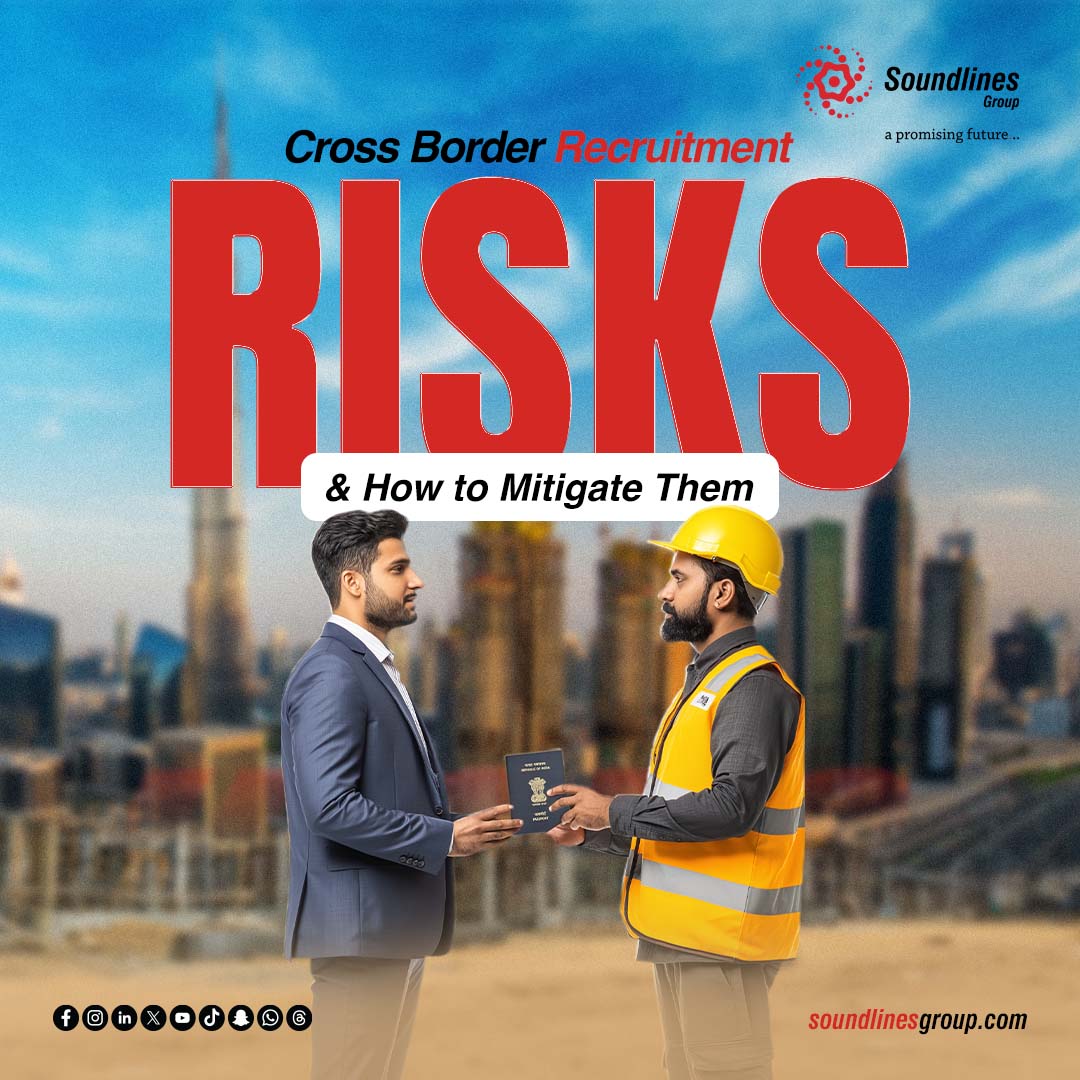
Hiring across borders has become an essential strategy for businesses that need to scale quickly, access specialized skills, or meet project deadlines that local labor markets alone cannot fulfill. Industries like construction, oil & gas, logistics, hospitality, and manufacturing all depend heavily on international manpower to drive operations forward.
But cross-border recruitment is not without its challenges. Employers face a range of risks that, if not managed properly, can lead to financial losses, compliance issues, or even reputational harm. This is where understanding the risks — and partnering with the right recruitment agency — becomes critical.
The Key Risks in Cross-Border Recruitment
1. Compliance with Immigration and Labor Laws
Each country has unique immigration procedures, visa requirements, and labor laws. Employers unfamiliar with these regulations may unintentionally violate local laws, exposing themselves to penalties or project delays. For example, quota restrictions in Gulf countries or specific skill licensing requirements in Russia can complicate recruitment.
2. Documentation Errors and Fraudulent Practices
Incomplete or incorrect documentation is one of the most common risks in overseas hiring. In some cases, fraudulent documents may even pass initial screenings, only to create issues later during audits or visa processing. This not only delays mobilization but can also damage the employer’s credibility with government authorities.
3. Ethical Concerns and Hidden Costs
In international recruitment, candidates are sometimes charged illegal or excessive fees by unscrupulous agents. While employers may not be directly involved, these practices can lead to dissatisfaction, early resignations, or legal disputes — and may damage the employer’s reputation if traced back.
4. Skill Mismatches
Hiring from multiple regions without standardized testing can lead to inconsistent skill levels. A “welder” from one country may have very different capabilities than a welder from another. If not addressed, this can compromise safety and productivity.
5. Cultural and Integration Gaps
Workers deployed across borders often face cultural, linguistic, and environmental adjustments. If they are not prepared or supported, attrition rates can rise, affecting project continuity.
Strategies to Mitigate Cross-Border Recruitment Risks
1. Work with Licensed Recruitment Agencies
Employers should only partner with agencies that are certified in both the source country and the destination country. Licensed agencies are more accountable and better equipped to ensure compliance.
2. Ensure End-to-End Documentation Support
A strong recruitment partner handles medical testing, police clearances, trade certifications, and visa paperwork with precision. This reduces errors and speeds up mobilization.
3. Adopt Zero-Cost Recruitment Models
Ethical recruitment agencies, like Soundlines, operate on a transparent, zero-cost basis for candidates. This eliminates the risk of worker exploitation, ensuring candidates arrive motivated and loyal.
4. Implement Trade Testing and Skill Verification
Standardized trade testing ensures that all candidates meet the required benchmarks. Accredited testing centers can confirm whether welders, electricians, drivers, or hospitality staff are truly job-ready.
5. Provide Pre-Departure Orientation
Orientation sessions help workers understand cultural norms, job expectations, and safety requirements before leaving their home country. This prepares them for smoother integration into the new environment.
6. Stay Updated on Changing Regulations
Immigration and labor laws evolve constantly. Recruitment partners with a global presence maintain in-house legal and compliance teams to monitor these changes, ensuring employers remain compliant.
The Recruitment Partner Advantage
Managing all of the above in-house is time-consuming and resource-intensive. Employers who rely solely on internal HR teams often find themselves overwhelmed by international compliance, skill testing, and documentation requirements.
This is where recruitment partners create real value. A partner like Soundlines Group not only manages the risks but also transforms recruitment into a seamless, end-to-end process. From sourcing workers in India, Nepal, Bangladesh, Kenya, Ghana, Sri Lanka, or the Philippines, to testing, documentation, and deployment — every step is managed professionally.
Employers gain peace of mind knowing that their workforce is:
- Certified and medically fit.
- Deployment-ready within deadlines.
- Ethically recruited with no hidden costs.
- Matched to the exact skill requirements of the project.
Conclusion
Cross-border recruitment can accelerate growth and empower businesses to meet ambitious goals — but only if the risks are identified and mitigated early. Employers must prioritize compliance, quality, and ethics at every stage of recruitment. Partnering with a global manpower expert ensures that projects are not only adequately staffed but also future-proofed against risks.
For over 25 years, Soundlines Group has been a trusted name in cross-border recruitment, serving industries worldwide with end-to-end manpower solutions. With operations across 23+ countries, we provide clients with the confidence to recruit internationally without the risks.
👉 Secure your workforce today with Soundlines Group. Visit www.soundlinesgroup.com.