In most industries, productivity is rarely limited by demand. It is limited by how well teams function together.
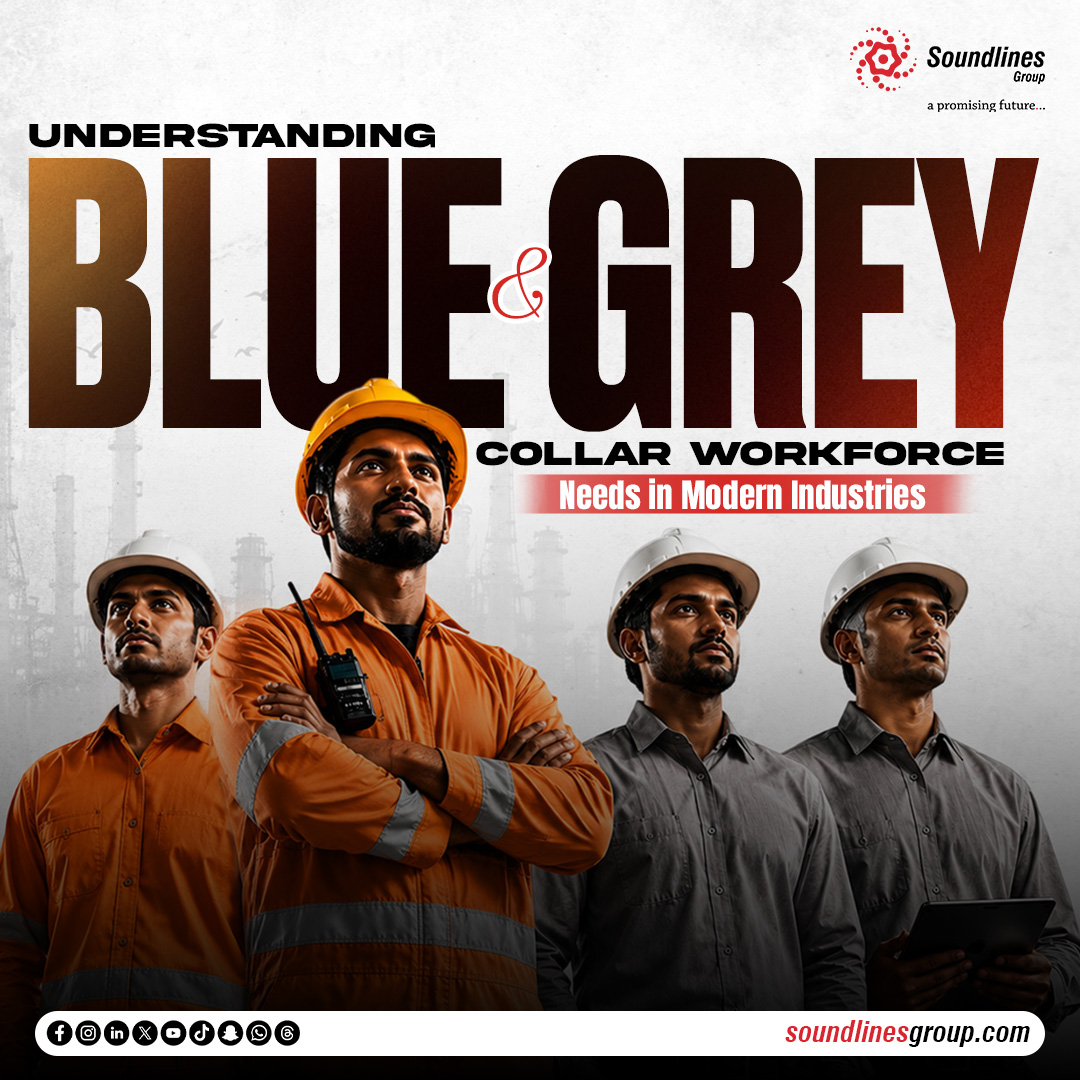
On one side, there are execution-heavy roles—workers who operate machinery, handle materials, and deliver output on the ground. On the other, there are roles that ensure coordination—supervisors, operators, and team leads who keep processes aligned.
These two segments—blue collar and grey collar—are often discussed separately. But in reality, they are deeply interdependent.
The gap between them is where most inefficiencies begin.
Table of Contents
ToggleWhere the Disconnect Usually Happens
In growing organisations, hiring tends to follow urgency.
A project begins, demand increases, and the immediate focus shifts to building execution teams. Blue-collar hiring accelerates. Teams expand. Output begins.
But over time, cracks start to show.
- Work slows down despite adequate manpower
- Errors increase across repetitive tasks
- Coordination between teams weakens
- Supervisors struggle to manage growing teams
The issue is not a workforce shortage. It is an imbalance.
Too much execution without enough coordination.
Why Grey Collar Roles Become Critical at Scale
Grey-collar roles are often underestimated because they don’t directly produce output.
But they define how output happens.
A skilled supervisor can:
- Reduce downtime across teams
- Improve communication between departments
- Ensure consistent quality in execution
Without this layer, even experienced workers can become inefficient—not because they lack skill, but because they lack direction.
In large operations, this becomes more visible. Teams grow, but productivity does not increase at the same pace.
The Other Side of the Problem
The imbalance can also happen in reverse.
Some organisations focus heavily on supervision and control, building multiple layers of coordination without strengthening execution teams.
This leads to:
- Delayed decision-making
- Underutilised manpower
- Slower output despite structured systems
In such cases, there is direction—but not enough capacity to deliver.
What Modern Workforce Planning Requires
Managing the blue- and grey-collar workforce today is less about hiring numbers and more about designing structure.
It requires clarity on:
- How many execution roles are needed per supervisor
- Which roles require technical oversight
- Where coordination adds value and where it slows down
This is not a static calculation. It changes with project size, industry, and operational complexity.
Why Traditional Hiring Approaches Fall Short
Most hiring processes treat these roles independently.
Blue-collar hiring focuses on volume.
Grey-collar hiring focuses on experience.
What gets missed is alignment.
When both segments are not planned together:
- Teams operate in silos
- Output becomes inconsistent
- Supervisory control weakens
This is where structured workforce systems become necessary.
A More Practical Way to Look at It
Instead of asking, “How many people do we need?”, organisations need to ask the following:
“How should teams be structured to perform better?”
This shift changes hiring from a reactive task to a strategic function.
It allows companies to:
- Build teams that scale efficiently
- Maintain consistency across operations
- Reduce dependency on constant supervision
Conclusion
Blue- and grey-collar workers are not separate layers—they are two sides of the same system.
When they are balanced, operations become predictable.
When they are not, inefficiencies begin to compound.
Modern industries require workforce planning that brings both together in a structured way.
With 25+ years of experience and a presence across 22+ international locations, Soundlines Group supports businesses with structured workforce solutions—helping them build balanced teams that deliver both execution and control at scale.