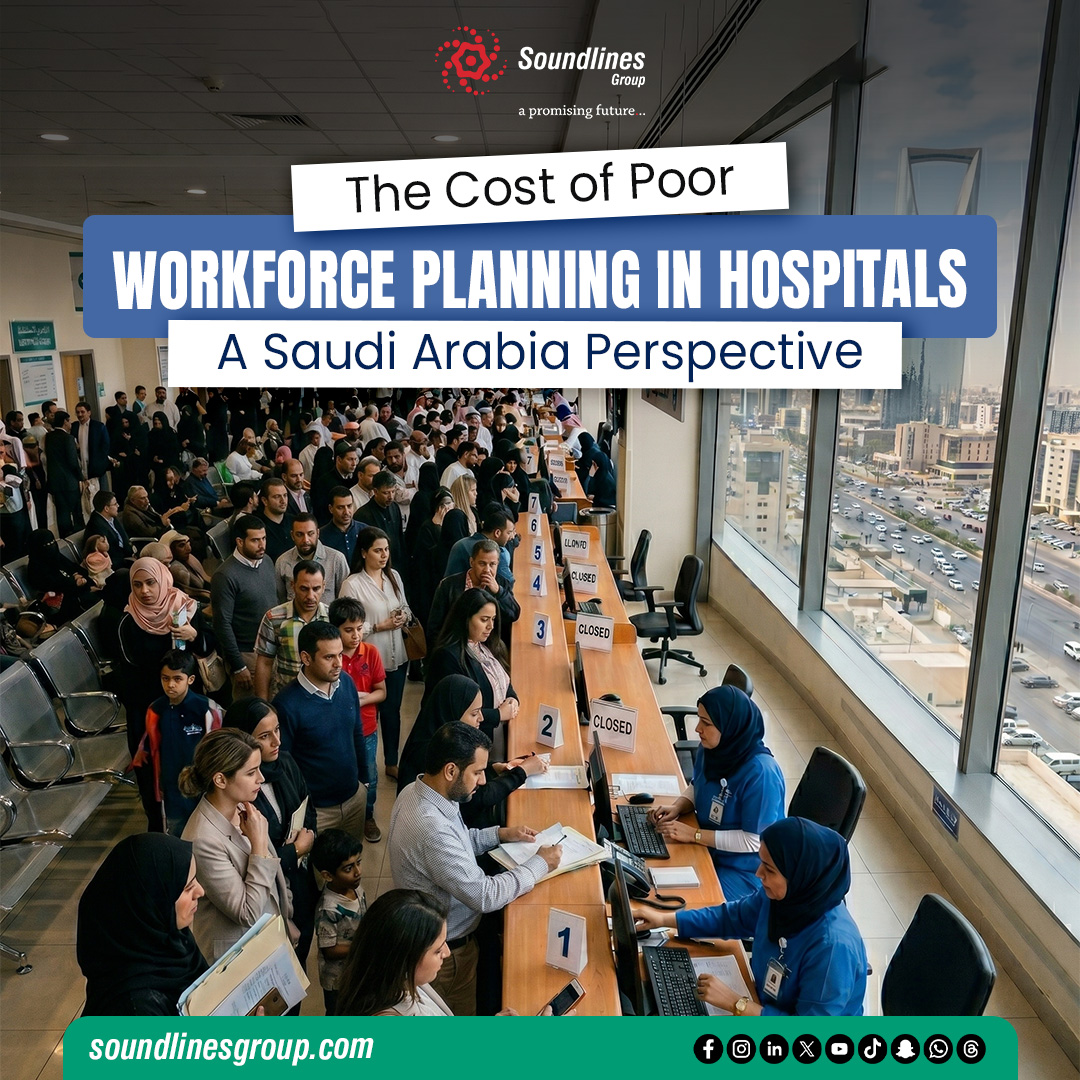
In healthcare, the cost of inefficiency is rarely immediate—but it is always cumulative.
Hospitals often measure performance through infrastructure, patient volume, and clinical outcomes. However, one of the most overlooked factors affecting all three is workforce planning.
In Saudi Arabia, where healthcare systems are expanding rapidly, poor workforce planning is no longer a minor operational issue. It is a direct contributor to rising costs, delays, and reduced efficiency.
Table of Contents
ToggleThe Hidden Nature of Workforce Costs
Unlike equipment or infrastructure, workforce inefficiencies are not always visible on balance sheets.
They appear indirectly through:
- Delays in patient handling
- Increased overtime expenses
- Underutilised facilities
- Reduced staff productivity
These costs build gradually, making them harder to identify but more impactful over time.
Overstaffing vs. Understaffing
Poor workforce planning often results in imbalance.
In some cases, hospitals may overstaff certain departments, leading to:
- Increased operational costs
- Inefficient utilisation of resources
In other cases, understaffing leads to:
- Delays in patient care
- Increased workload on existing staff
- Higher risk of burnout
Both scenarios reduce overall efficiency and increase long-term costs.
Impact on Patient Experience
Workforce gaps directly affect how patients experience healthcare services.
When staffing is not aligned with demand:
- Waiting times increase
- Communication slows down
- Service quality becomes inconsistent
In a competitive healthcare environment, patient experience plays a critical role in reputation and trust.
Poor workforce planning can weaken both.
Pressure on Existing Workforce
One of the most immediate consequences of poor planning is the strain on existing staff.
When teams are understaffed:
- Workload increases across shifts
- Stress levels rise
- Efficiency declines
Over time, this can lead to higher attrition, creating a cycle where workforce challenges continue to grow.
Delays in Operational Execution
Hospitals operate through tightly coordinated systems.
Any gap in workforce availability can lead to:
- Delays in diagnostics and treatment
- Slower coordination between departments
- Reduced overall throughput
These delays affect both operational efficiency and patient outcomes.
Reactive Hiring Increases Costs
When workforce planning is weak, hiring becomes reactive.
This often results in:
- Urgent hiring at higher costs
- Compromises in candidate quality
- Longer onboarding timelines
Reactive hiring solves immediate gaps but increases long-term inefficiencies.
The Role of Structured Workforce Planning
Effective workforce planning helps avoid these challenges by creating a predictable system.
This includes:
- Forecasting demand based on patient flow
- Aligning workforce requirements with operational goals
- Maintaining a steady pipeline of qualified candidates
With structured planning, hospitals can control costs while improving efficiency.
Why Scale Makes Planning More Critical
As healthcare facilities in Saudi Arabia grow larger, the impact of workforce planning becomes more significant.
Large hospitals require:
- Consistency across departments
- Stability across shifts
- Alignment between workforce and operations
Without structured systems, small inefficiencies can quickly scale into larger problems.
Conclusion
The cost of poor workforce planning in hospitals is not limited to financial impact—it affects patient care, operational efficiency, and long-term sustainability.
In Saudi Arabia’s expanding healthcare landscape, workforce planning must move from a reactive function to a structured system.
Hospitals that prioritise this shift will be better equipped to manage growth while maintaining consistent performance.
With 25+ years of experience and a presence across 22+ international locations, Soundlines Group supports healthcare institutions in Saudi Arabia as a manpower solutions provider—helping them build structured workforce systems that reduce inefficiencies and support long-term operational stability.