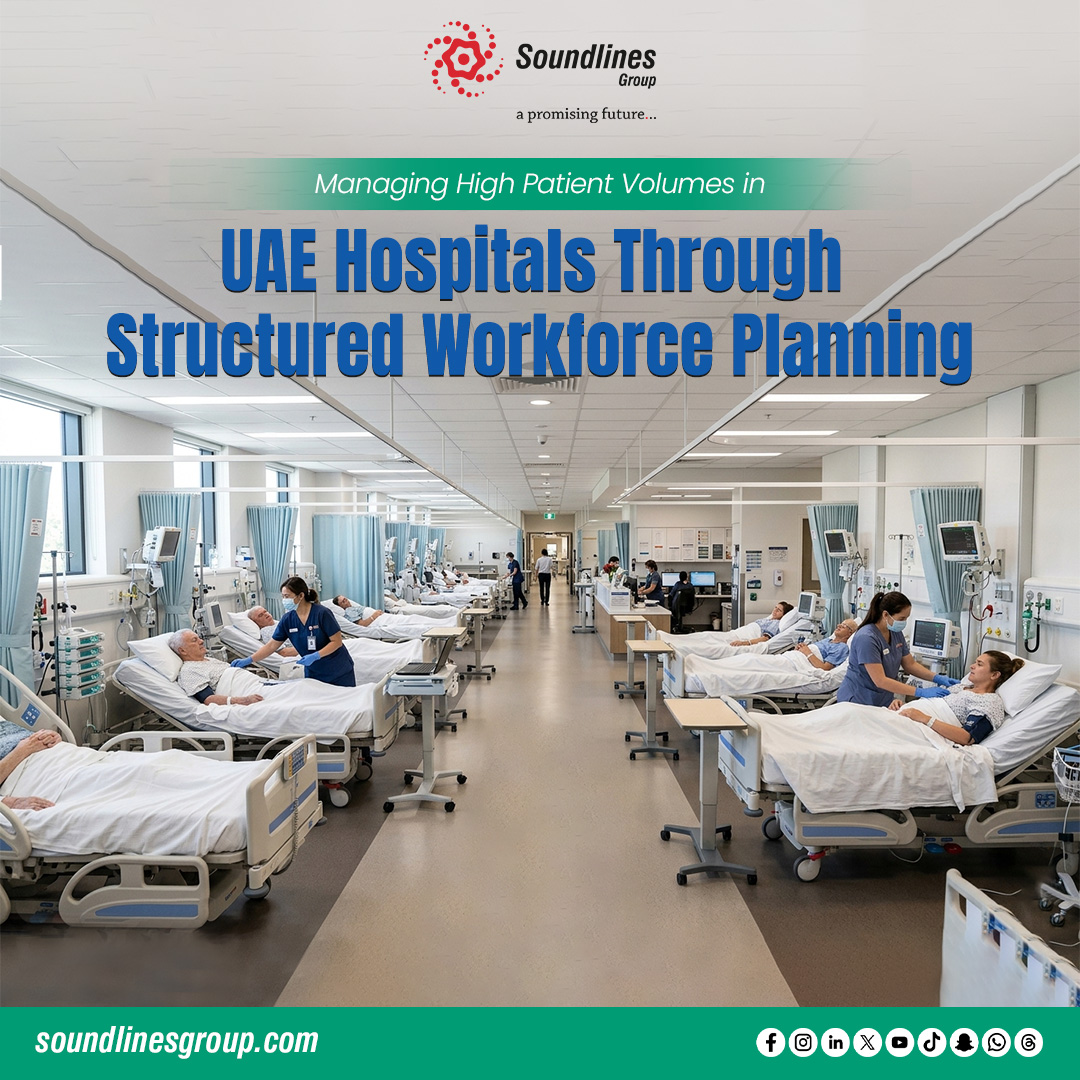
In the UAE, healthcare demand doesn’t rise gradually—it surges.
Seasonal trends, population growth, medical tourism, and urban expansion all contribute to fluctuating patient volumes. For hospitals, the real challenge isn’t just handling these spikes—it’s being prepared for them.
Because when patient volumes increase without corresponding workforce readiness, pressure builds across the system.
Table of Contents
ToggleWhen Demand Outpaces Workforce
High patient volumes test every layer of hospital operations.
From emergency departments and outpatient services to diagnostics and inpatient care, every unit experiences increased load. Without adequate staffing, this leads to:
- Longer patient waiting times
- Slower admissions and discharges
- Delays in diagnostics and reporting
- Increased workload on existing staff
Hospitals don’t just need more people during peak periods—they need the right workforce, ready at the right time.
Why Volume Spikes Are Hard to Manage
Unlike predictable industries, healthcare demand can shift quickly.
A sudden rise in patient inflow can be triggered by:
- Seasonal illnesses
- Public health situations
- Expansion of healthcare services
- Increased patient footfall from surrounding regions
These fluctuations make it difficult for hospitals to rely on static workforce models.
A fixed team cannot efficiently handle dynamic demand.
The Limitations of Traditional Staffing Models
Many hospitals continue to operate with workforce structures designed for average demand—not peak demand.
This creates a gap between:
- Available staff
- Required workforce capacity
During high-volume periods, this gap becomes visible through:
- Overcrowded departments
- Overworked staff
- Reduced efficiency in patient handling
Traditional hiring models, which are often reactive, cannot respond quickly enough to these changes.
Shifting From Reactive Hiring to Workforce Planning
The solution lies in moving from reactive hiring to structured workforce planning.
Instead of responding after demand increases, hospitals need to anticipate workforce requirements in advance.
A structured approach includes:
- Forecasting patient inflow trends
- Planning workforce requirements across departments
- Maintaining access to a ready talent pool
This ensures that workforce availability aligns with patient demand—not lags behind it.
Flexibility: The Core of Workforce Strategy
In high-volume environments, flexibility is critical.
Hospitals need the ability to:
- Scale workforce up during peak periods
- Maintain optimal staffing levels during normal operations
- Reallocate staff across departments when needed
A rigid workforce model limits this flexibility, while a structured system enables it.
The Advantage of Global Workforce Access
To manage fluctuating demand, hospitals often require access to a broader talent pool.
International workforce networks provide:
- Availability of skilled healthcare professionals at scale
- Faster response to workforce shortages
- Diversity in experience across healthcare environments
This allows hospitals to maintain operational balance even during periods of high demand.
Balancing Efficiency and Patient Experience
Managing patient volumes is not just about numbers—it’s about experience.
Even during peak periods, hospitals are expected to maintain:
- Timely care delivery
- Clear communication
- Consistent service standards
A well-planned workforce ensures that patient experience does not decline under pressure.
Conclusion
In UAE hospitals, high patient volumes are not an exception—they are an ongoing reality.
The difference between strain and stability lies in how workforce planning is approached. Hospitals that rely on reactive hiring struggle to keep up. Those that invest in structured workforce systems are able to manage demand with control and consistency.
With over 25 years of experience and a presence across 22+ international locations, Soundlines Group supports healthcare institutions with structured workforce solutions—helping them manage fluctuating patient volumes without compromising on care delivery.