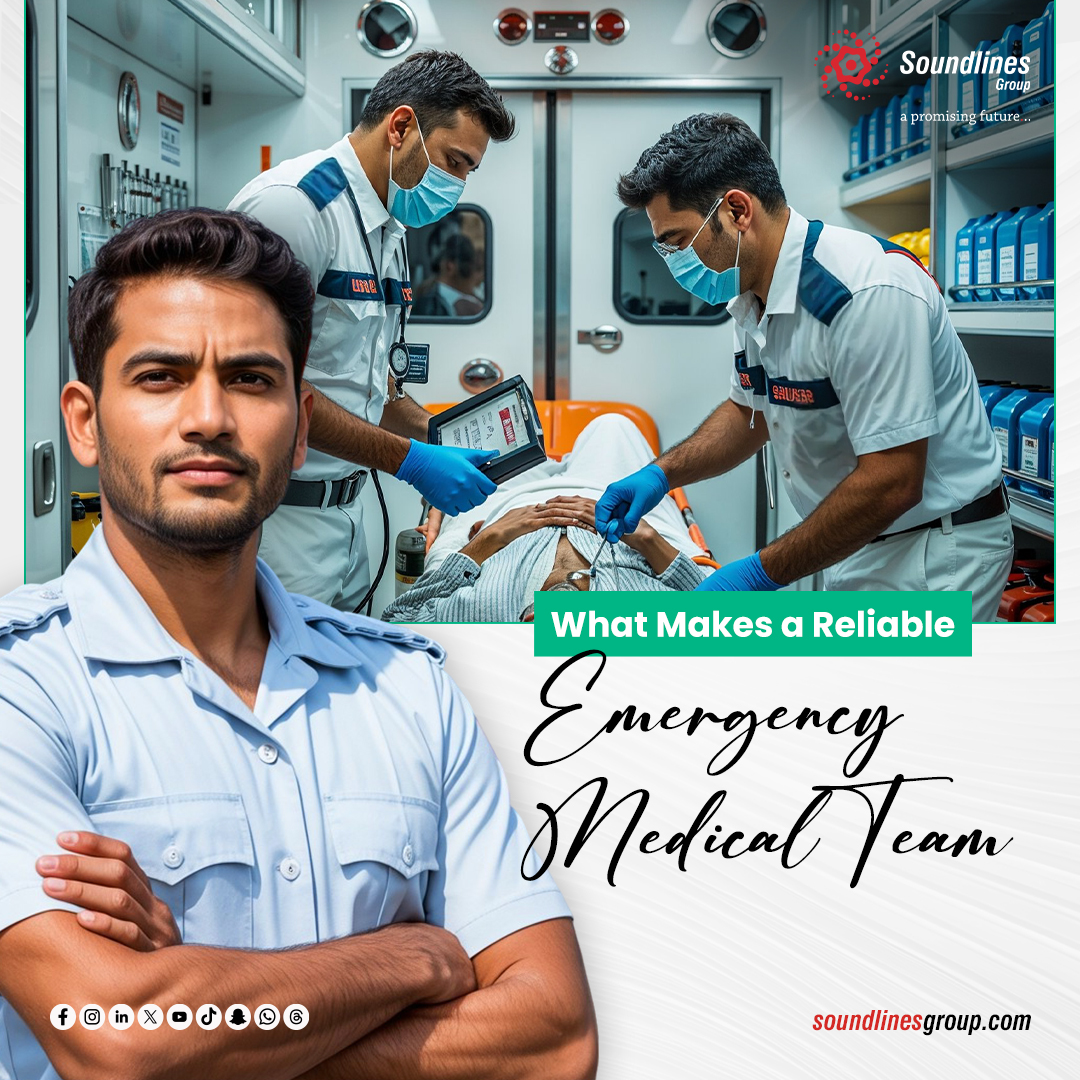
An Employer’s Guide to Sourcing Frontline Healthcare Staff with Confidence
In a medical emergency, there is no room for guesswork. Every second counts and the quality of your emergency medical team can determine whether that second ends in survival or tragedy.
But how do you ensure that the team at the frontlines—paramedics, ambulance drivers, and emergency technicians is not only qualified on paper but truly capable of handling crises in real time?
At Soundlines Group, we’ve worked closely with hospitals, emergency service providers, and public health systems to understand this challenge. Based on years of global recruitment experience, we’ve developed a clear framework: a recruitment checklist that every healthcare employer should follow before bringing emergency medical professionals on board.
1. Certification Alone Isn’t Enough. The Test for Real-World Skills Is.
The best candidates go beyond textbooks. It’s essential to recruit personnel who can:
- Navigate emergency response vehicles through urban or rural congestion
- Administer basic life support (BLS) confidently in high-pressure scenarios
- Follow hospital protocols and documentation processes accurately under duress
At Soundlines, every candidate undergoes a live trade test at our partner testing facilities, like Houston Testing & Skill Upgradation Academy, simulating real job conditions before deployment.
2. Verify Soft Skills and Response Temperament
Emergency staff are often the first human contact a patient has during a crisis. Their ability to:
- Stay calm
- Communicate with empathy
- Coordinate with hospital teams
It is just as vital as their clinical skills.
Make sure your recruitment process assesses communication, stress tolerance, and cultural adaptability—especially when hiring from abroad.
3. Don’t Overlook the Importance of Ambulance Drivers
Ambulance drivers are more than chauffeurs—they are trained responders in their own right. They must be:
- Familiar with medical transport protocols
- Equipped to assist in basic patient care
- Trained in emergency driving under pressure
Our network ensures all ambulance driver candidates are not just licensed but evaluated for emergency-readiness—a detail often skipped in traditional hiring processes.
4. Compliance with International & Local Regulations
For global hiring especially from source markets like India, Nepal, and Bangladesh—it is crucial to ensure:
- Ethical recruitment practices
- Valid certifications and background checks
- Adherence to the destination country’s labour and healthcare laws
Soundlines Group’s recruitment processes are audited and fully compliant with international labor standards. We manage everything from candidate documentation to medical screening, so you don’t have to.
5. Post-Deployment Support Matters
Reliability doesn’t end at hiring. Candidates must feel supported and guided after deployment. Ongoing communication, local onboarding, and cultural orientation sessions reduce dropouts and increase long-term retention.
We ensure candidates are inducted properly before they reach your location—with visual briefings, language support, and clear documentation provided in advance.
Final Thought: Emergencies Don’t Wait. Neither Should You.
In emergency healthcare, the margin for error is razor-thin. Having the right team—prepared, practiced, and present—can define your organization’s response credibility.
At Soundlines Group, we help healthcare providers build that credibility—by sourcing, verifying, and deploying world-class frontline staff who are trained to act, not just react.
From ambulance drivers and paramedics to ER support staff, we offer a recruitment approach designed for emergency response excellence.
Explore workforce solutions at www.soundlinesgroup.com