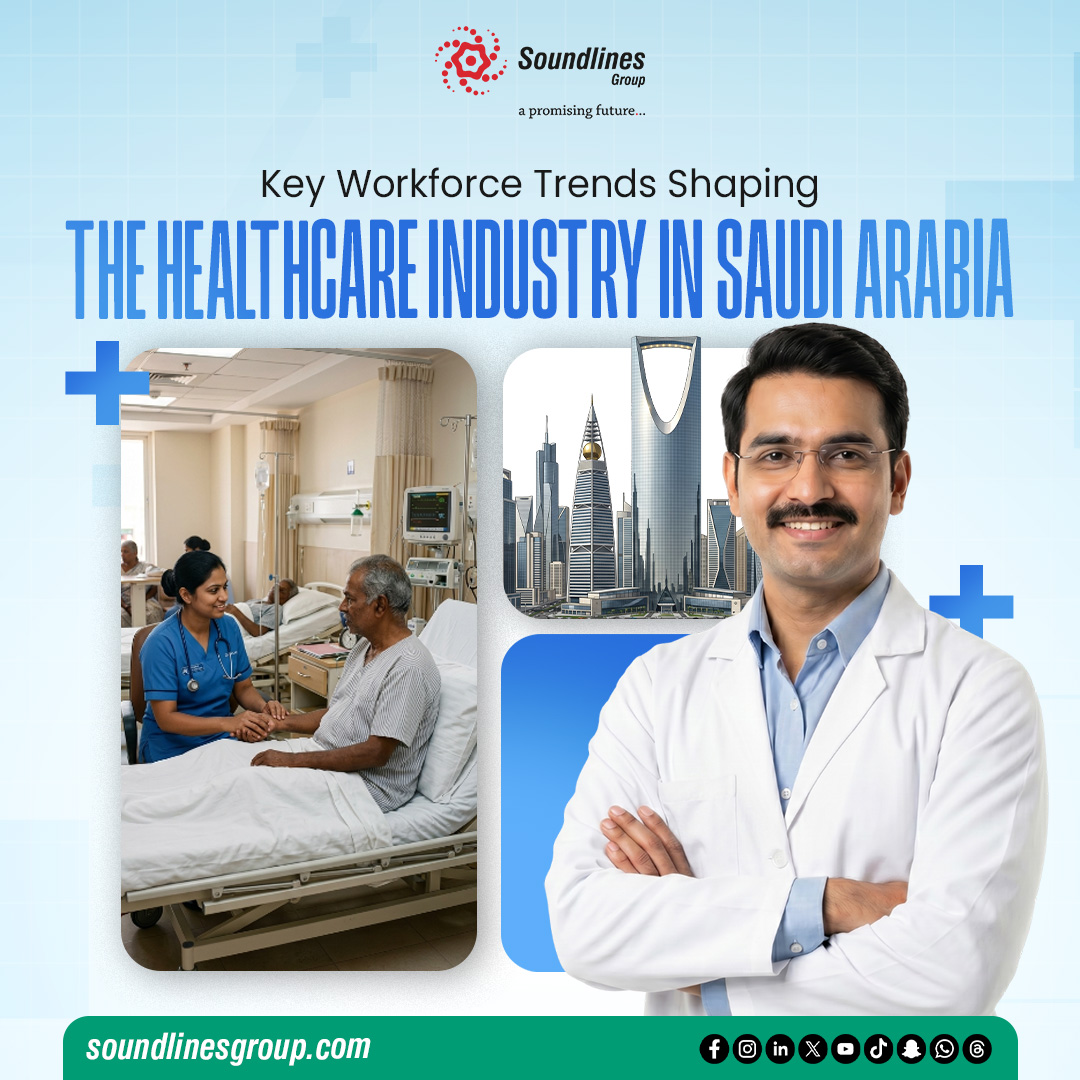
Healthcare in Saudi Arabia is evolving rapidly, but the most significant changes are not only in infrastructure or technology—they are in how workforce is being planned and managed.
As hospitals expand and patient demand increases, traditional hiring approaches are being replaced by more structured and forward-looking workforce strategies.
In 2026, several key trends are shaping how healthcare institutions approach manpower planning across the Kingdom.
Table of Contents
ToggleShift from Hiring to Workforce Planning
One of the most noticeable changes is the move away from reactive hiring.
Earlier, many healthcare facilities focused on filling positions as needs arose. Today, that approach is proving insufficient for large-scale operations.
Hospitals are now focusing on:
- Forecasting workforce demand in advance
- Identifying critical roles early
- Building pipelines of skilled professionals
This shift allows institutions to maintain continuity rather than respond to gaps after they appear.
Growing Dependence on International Workforce
With the rapid expansion of healthcare infrastructure, local talent alone is not enough to meet demand.
Healthcare institutions are increasingly relying on international workforce to:
- Fill specialized roles
- Maintain staffing levels across departments
- Support new facility launches
This trend is not temporary—it is becoming a permanent component of workforce strategy in Saudi Arabia.
Increased Focus on Role-Specific Skills
General experience is no longer sufficient in modern healthcare environments.
Hospitals now prioritise:
- Role-specific technical skills
- Experience with advanced medical equipment
- Familiarity with specialized procedures
This applies across roles—from ICU nurses to lab technicians and radiology staff.
The focus has shifted from “available candidates” to “relevant candidates.”
Compliance as a Core Requirement
Regulatory standards in Saudi Arabia are becoming more stringent, particularly in healthcare.
Workforce must meet:
- Licensing and certification requirements
- Documentation and verification standards
- Role-specific regulatory guidelines
This has made compliance a critical part of workforce planning rather than a post-hiring process.
Healthcare institutions must ensure readiness before deployment, not after.
Demand for Faster Workforce Deployment
Speed is becoming a key differentiator.
As patient volumes increase and facilities expand, delays in hiring can directly impact operations.
Hospitals now require:
- Faster sourcing of candidates
- Reduced onboarding timelines
- Smooth mobilization processes
However, speed must be balanced with quality—making structured systems essential.
Focus on Workforce Stability
High attrition and inconsistent staffing can disrupt healthcare operations.
To address this, institutions are focusing on:
- Building stable workforce structures
- Reducing dependency on short-term hiring
- Maintaining consistency across teams
Workforce stability is now seen as a critical factor in operational efficiency.
Integration of Workforce Systems with Operations
Workforce planning is no longer isolated within HR functions.
It is now closely linked with:
- Operational planning
- Patient flow management
- Department-level efficiency
Hospitals are aligning manpower strategies with overall business and operational goals.
This integration ensures that workforce supports performance, rather than reacting to it.
The Role of Structured Manpower Solutions
As these trends evolve, healthcare institutions are increasingly adopting structured manpower solutions.
This approach enables:
- Access to global talent pools
- Standardized screening and validation
- Compliance management
- Predictable deployment timelines
It transforms workforce from a reactive process into a managed system.
Conclusion
The healthcare industry in Saudi Arabia is moving towards a more structured, scalable, and strategic approach to workforce management.
These trends highlight a clear shift—from hiring as an activity to workforce planning as a system.
Healthcare institutions that adapt to these changes will be better positioned to handle growth, maintain efficiency, and deliver consistent patient care.
With 25+ years of experience and a presence across 22+ international locations, Soundlines Group supports healthcare institutions in Saudi Arabia as a manpower solutions provider—helping them align workforce strategies with the evolving needs of the industry.