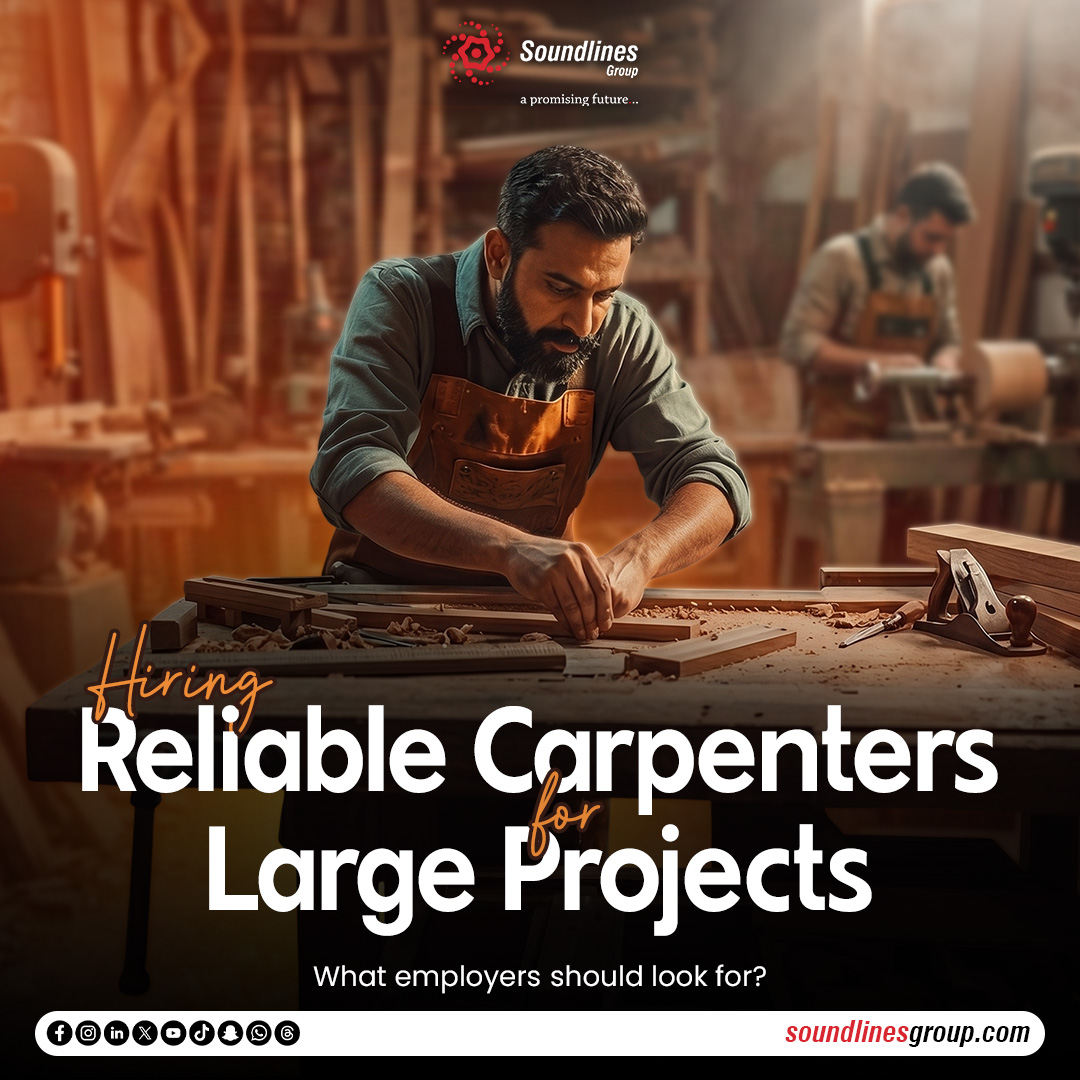
In large construction projects, finishing quality often defines perception.
While structural work sets the foundation, it is the finishing—woodwork, fittings, detailing—that determines how a project is experienced. This makes carpenters one of the most critical trades on site.
Yet, hiring reliable carpenters at scale remains a challenge for many employers. The issue is not just availability—it is consistency, skill, and on-ground performance.
Table of Contents
ToggleWhy Carpenters Play a Critical Role
Carpenters contribute across multiple stages of a project:
- Formwork and structural support
- Interior woodwork and fittings
- Doors, panels, and finishing elements
Their work directly impacts:
- Final appearance of the project
- Precision in fittings and alignment
- Overall quality perception
Even small inconsistencies in workmanship can affect the outcome significantly.
The Gap Between Experience and Capability
One of the most common hiring challenges is assuming that experience equals skill.
In reality, employers often face:
- Variations in craftsmanship despite similar experience
- Lack of familiarity with modern tools or materials
- Inconsistent output across different workers
This gap becomes more visible in large projects where uniformity is expected across teams.
What Employers Should Evaluate
Hiring reliable carpenters requires more than reviewing past experience.
Employers should focus on:
- Hands-on skill testing for practical capability
- Familiarity with project-specific requirements
- Ability to work within timelines and supervision structures
- Consistency in output across repetitive tasks
These factors determine whether a carpenter can perform effectively on-site.
The Importance of Consistency at Scale
Large projects require multiple carpenters working across different sections simultaneously.
This creates a need for:
- Uniform skill levels across teams
- Standardised work quality
- Reduced dependency on rework
Inconsistent hiring leads to variations in finishing, which can delay project completion and increase costs.
Time Sensitivity in Hiring
Carpenters are often required at specific stages of construction.
Delays in hiring or deployment can result in:
- Idle time for other teams
- Disruption in project sequencing
- Missed deadlines
This makes timely availability as important as skill.
A structured hiring approach ensures that carpenters are available exactly when required.
Balancing Speed and Quality
Employers often face a trade-off between hiring quickly and hiring well.
Rushed hiring can lead to:
- Skill mismatches
- Increased supervision requirements
- Higher chances of rework
On the other hand, delayed hiring affects timelines.
Structured workforce systems help balance both—ensuring speed without compromising quality.
Reducing Dependency on Trial and Error
In many cases, employers rely on trial-based hiring—bringing workers on-site and evaluating performance over time.
This approach leads to:
- Wasted time and resources
- Inconsistent output during initial stages
- Increased management effort
Pre-screened and skill-validated workforce reduces this dependency, allowing teams to perform from day one.
Conclusion
Reliable carpenters are essential to delivering high-quality outcomes in large construction projects.
Hiring for these roles requires a focus on skill validation, consistency, and timely deployment. Employers who invest in structured workforce systems are better equipped to maintain quality while meeting deadlines.
With 25+ years of experience and a presence across 22+ international locations, Soundlines Group supports construction companies with structured workforce solutions—helping them access skilled, reliable carpenters aligned with project requirements and execution timelines.