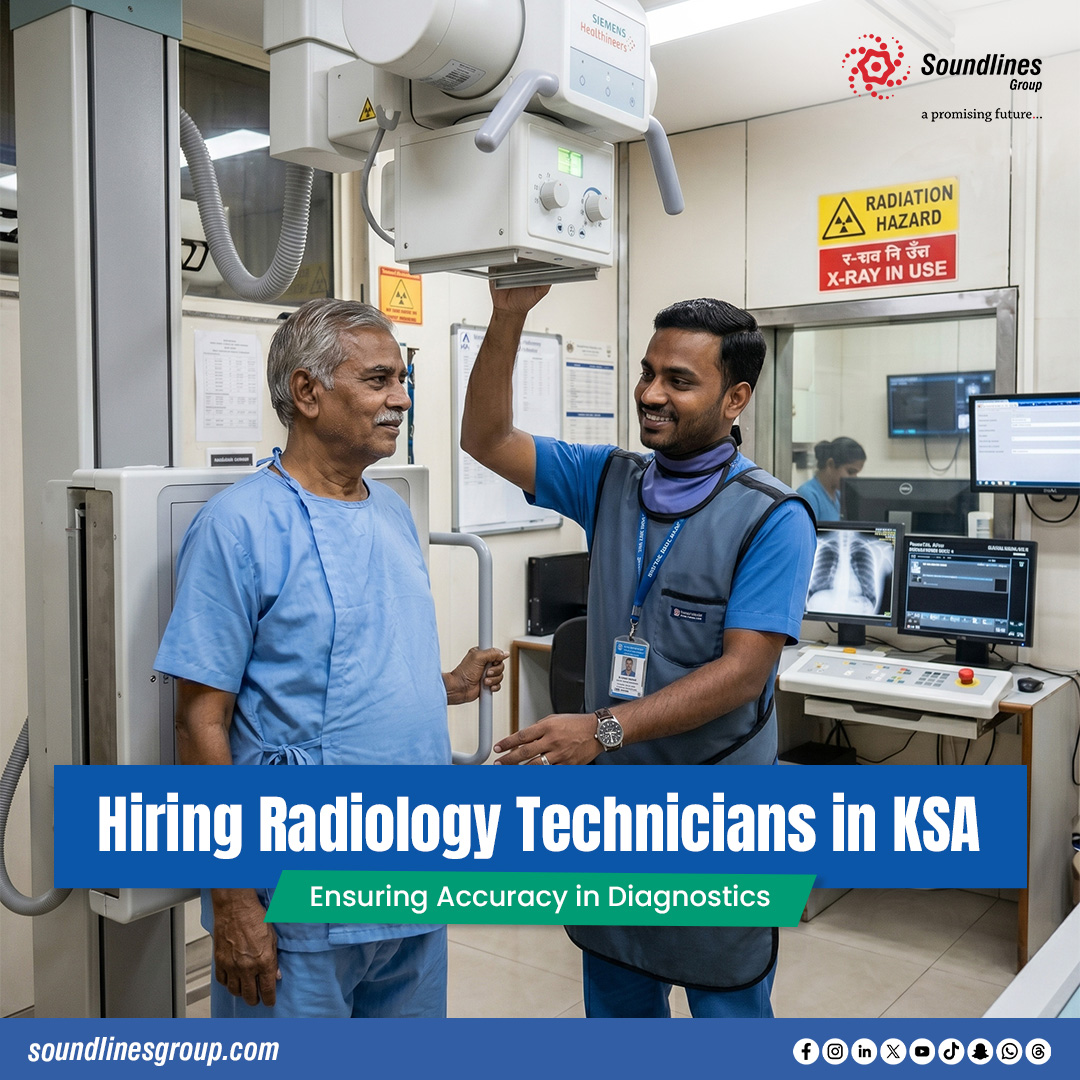
In modern healthcare, diagnostic accuracy is the foundation of effective treatment. Before a decision is made, before a procedure begins, and before a treatment plan is finalised—there is data. And much of that data comes from radiology.
In Saudi Arabia’s rapidly advancing healthcare sector, radiology departments are becoming more sophisticated, making the role of skilled radiology technicians increasingly critical.
Why Radiology Technicians Play a Key Role
Radiology technicians are responsible for operating imaging equipment such as:
- X-ray systems
- CT scanners
- MRI machines
Their role goes beyond handling equipment. They ensure:
- Proper image quality
- Patient positioning and safety
- Accuracy in diagnostic imaging
Even minor errors in imaging can lead to misinterpretation, affecting diagnosis and treatment outcomes.
Rising Demand in KSA’s Healthcare Sector
With increasing investments in healthcare infrastructure under Vision 2030, Saudi Arabia is witnessing:
- Expansion of diagnostic centres
- Upgradation of imaging technologies
- Growth in specialised care units
This has led to higher demand for qualified radiology technicians, particularly those with experience in advanced imaging systems.
Challenge 1: Skill and Technology Alignment
Modern radiology departments use highly advanced equipment. Hiring technicians without relevant exposure can lead to:
- Inefficient use of equipment
- Longer diagnostic turnaround times
- Increased dependency on training
Hospitals must ensure that candidates are familiar with the specific technologies used in their facilities.
Challenge 2: Precision and Compliance Requirements
Radiology involves strict protocols to ensure both accuracy and patient safety.
Technicians must:
- Follow radiation safety guidelines
- Maintain equipment standards
- Adhere to regulatory compliance
Any lapse in these areas can impact both patient outcomes and hospital compliance standards.
Challenge 3: Shortage of Experienced Professionals
Like many specialised healthcare roles, experienced radiology technicians are in high demand.
Hospitals often face:
- Limited availability of locally trained professionals
- High competition for skilled candidates
- Delays in filling critical diagnostic roles
This makes sourcing and screening more challenging.
Challenge 4: Licensing and Documentation
Radiology technicians in Saudi Arabia must meet specific licensing requirements before they can practice.
This includes:
- Qualification verification
- Regulatory approvals
- Documentation checks
Delays in these processes can slow down workforce deployment.
The Role of International Hiring
To address workforce shortages, many hospitals in KSA rely on international talent pools.
International hiring helps:
- Access experienced technicians
- Fill roles faster
- Maintain consistency in diagnostic services
However, it also requires structured processes to ensure compliance and readiness.
Best Practices for Hiring Radiology Technicians
Hospitals can improve hiring outcomes by focusing on:
- Role-Specific Screening:
Evaluating candidates based on equipment expertise and experience - Technology Familiarity:
Ensuring exposure to modern imaging systems - Compliance Readiness:
Verifying licensing and documentation in advance - Structured Deployment:
Aligning workforce availability with operational needs
This approach helps maintain both efficiency and accuracy in diagnostics.
Accuracy Depends on Capability
Radiology is not just about machines—it is about the people who operate them with precision and responsibility.
Hospitals that invest in hiring skilled, compliant, and experienced radiology technicians are better positioned to maintain high diagnostic standards and improve patient outcomes.
In Saudi Arabia’s evolving healthcare landscape, ensuring access to the right diagnostic workforce is essential. Soundlines Group supports hospitals as a manpower solutions provider, helping source, screen, and deploy qualified radiology technicians aligned with regulatory and operational requirements—ensuring accuracy where it matters most.