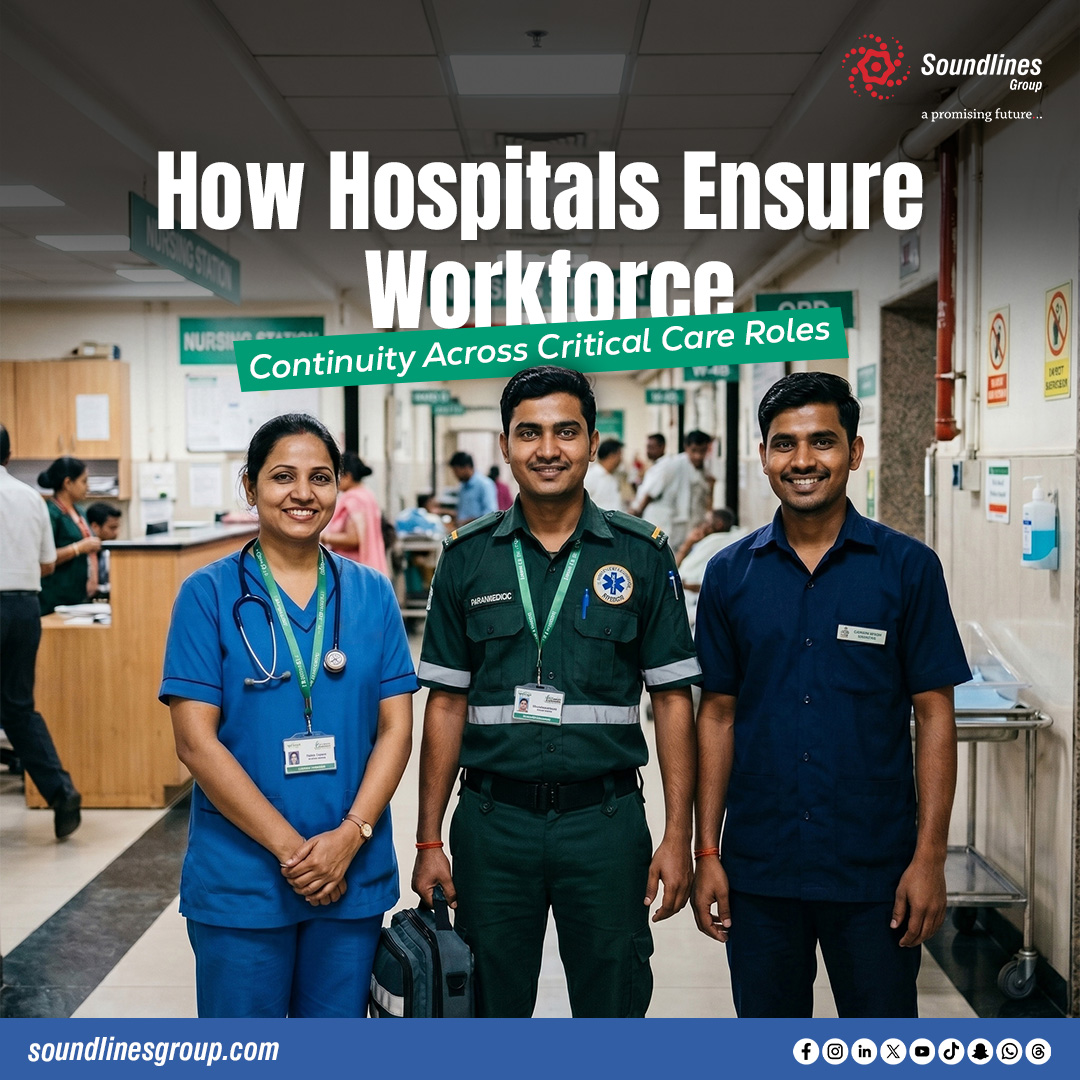
In healthcare, there are areas where delays are manageable—and then there are areas where delays are not an option at all. Critical care units fall firmly into the latter category.
ICU, emergency departments, and specialised care units operate in high-pressure environments where every role is essential. In such settings, workforce continuity is not just about efficiency—it is directly tied to patient outcomes.
Why Critical Care Roles Require Continuous Staffing
Critical care environments function on precision and coordination. Every professional—whether a nurse, technician, or support staff—plays a defined role in maintaining stability.
Any disruption in staffing can lead to:
- Delays in response time
- Increased burden on available staff
- Reduced monitoring and patient attention
- Higher operational risk
Unlike general departments, critical care units cannot compensate easily for workforce shortages.
The Complexity of Staffing Critical Roles
Ensuring continuity in critical care is more complex than standard workforce planning. Hospitals must account for:
- Round-the-clock staffing requirements
- Highly specialised skill sets
- Strict nurse-to-patient ratios
- Immediate response capabilities
This makes hiring and retention significantly more challenging, especially in high-demand healthcare markets.
Dependence on Specialised Skills
Critical care roles require specific expertise. General staffing approaches are not sufficient for positions such as:
- ICU nurses
- Emergency response teams
- Critical care technicians
These roles demand both technical knowledge and the ability to perform under pressure. As a result, the talent pool for such positions is limited, increasing the importance of structured sourcing.
Managing Shift-Based Workforce Continuity
Critical care operations run 24/7, making shift management a key component of workforce continuity.
Challenges often include:
- Maintaining equal skill distribution across shifts
- Avoiding fatigue in high-pressure environments
- Ensuring backup availability for unexpected absences
Without proper planning, workforce imbalances across shifts can affect performance and response time.
The Role of Workforce Pipelines
Hospitals that successfully maintain continuity in critical care roles often rely on pre-built workforce pipelines. Instead of hiring reactively, they:
- Identify recurring workforce needs
- Maintain access to pre-screened professionals
- Prioritise readiness over urgency
This approach ensures that replacements or additional staff can be deployed without delays.
International Workforce as a Key Enabler
Given the shortage of specialised professionals in many regions, international hiring has become an essential part of maintaining critical care staffing levels.
However, deploying international workforce requires:
- Verification of specialised skills
- Compliance with licensing standards
- Timely documentation and mobilisation
A structured approach is necessary to ensure that international workforce can be integrated seamlessly into critical care environments.
Reducing Risk Through Structured Workforce Systems
Hospitals are increasingly moving toward structured workforce systems to minimise risk in critical care operations.
These systems focus on:
- Consistent sourcing and screening processes
- Standardised deployment timelines
- Centralised coordination of workforce
This reduces dependency on last-minute hiring and improves overall readiness.
Where Continuity Makes the Difference
In critical care, consistency is not just operational—it is clinical.
The ability to maintain a stable, skilled workforce across every shift is what allows hospitals to deliver timely and effective care, even under pressure.
For healthcare institutions managing critical roles, the focus must shift from filling positions to ensuring continuity. Soundlines Group supports hospitals with access to qualified, compliance-ready professionals across critical care functions—helping ensure that workforce availability aligns with the demands of high-dependency environments.